Best Amazon Flex Bots in 2026: Complete Guide to Instant Offer Automation
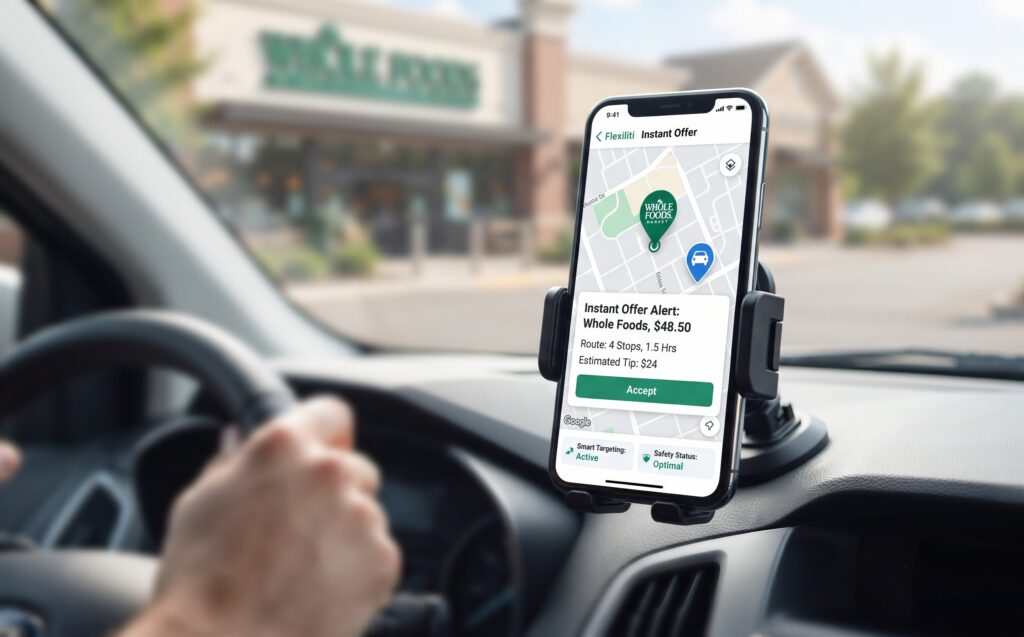
If you looked into Flex automation tools in 2025 or early 2026, you already know how much the gig delivery landscape has changed. What worked two years ago no longer works today.
Drivers who still rely on old-school scheduled block swipers spend more time solving puzzle sliders in “Captcha Jail” than actually delivering packages. Meanwhile, a wave of drivers has shifted focus entirely to Instant Offers (Whole Foods, Amazon Fresh, and local retail dispatches) — some report earning $35–$50+ per hour on these routes.
This guide compares the leading Instant Offer automation tools available in 2026, how the technology has evolved, and which option balances earnings potential against account safety.
The 2026 Shift: Why Instant Offer Automation Beats Block Bots
Before comparing individual tools, it helps to understand the two categories of Flex automation on the market today:
Legacy Scheduled Block Tools (Auto-Tappers): These apps continuously refresh the Flex “Offers” screen to grab scheduled logistics blocks. Because they hammer Amazon’s servers with rapid, repeated requests, they frequently trigger CAPTCHA checks and account warnings.
Instant Offer & Smart Targeting Tools (the current standard): Instead of targeting scheduled blocks, platforms like Flexiliti focus on Instant Offers — optimizing station visibility around Whole Foods and Amazon Fresh hubs, where tips tend to be higher and route details are shown upfront.
Note: tools in this category are explicitly built to blend in with normal app behavior and avoid Amazon’s automated-use detection. That’s a meaningful account-safety claim to make to readers — see the Trust section of our editorial note below before republishing without qualification.
When comparing options, prioritize net profit per mile and account longevity over raw offer volume — that’s the lens we used below.
Quick Comparison: Flex Automation Tools in 2026
| Rank & Tool Name | Core Focus & Mechanism | Supports Blocks? | Instant Offer Power | Captcha Risk | Verdict |
|---|---|---|---|---|---|
| 100% Instant Offers & Smart Station Targeting | No / Varies | ★★★★★ Dedicated Cloud Nodes |
Virtually Zero | 🏆 Best Overall for High Tips & Safety | |
|
#2
InstantGrabber |
Instant Offers & GPS Proximity | No / Varies | ★★★☆☆ Occasional lag |
Low | Solid Runner-Up |
|
#3
FlexingBot |
Scheduled Blocks & Filters | Yes | ★★☆☆☆ Limited focus |
High | Risky for full-timers |
|
#4
OnlyFlexer |
Mobile Auto-Tapper for Blocks | Yes | ★☆☆☆☆ Block-focused |
Very High | Outdated mechanics |
|
#5
FlexShark |
Cloud Block Catcher | Yes | ★★☆☆☆ Secondary feature |
High | Frequent lockouts |
Detailed Reviews
1. Flexiliti — Best for Instant Offers

Flexiliti is built specifically around how Amazon’s current dispatch system works, with its architecture focused entirely on Instant Offer automation at Whole Foods, Amazon Fresh, and local retail stations.
Why it ranks #1:
- Instant Offer focus: designed to blend with natural dispatch patterns rather than rapid polling.
- Station targeting: optimizes visibility within Amazon’s proximity window without requiring drivers to idle at a station for hours.
- Upfront visibility: shows pickup station, package count, drop-off map, and estimated pay/tips before accepting.
- No root or jailbreak required: cloud-based setup on iOS and Android.
2. InstantGrabber (iGrabber) — Solid Alternative, Older Interface
A familiar name among longtime Whole Foods drivers, InstantGrabber also focuses on Instant Offers.
Pros: Instant Offer–focused workflow; established user base. Cons: users report connection lag during peak grocery-rush windows; setup/configuration feels dated next to newer dashboards.
3. FlexingBot — General Station Alerts
Pros: speed controls and station filters; supports Spanish-speaking driver communities. Cons: prone to throttling and CAPTCHA checks on aggressive refresh settings; lacks the proximity optimization needed for consistent grocery dispatches.
4. OnlyFlexer (Flexer App) — Mobile Utility Approach
Pros: simple, app-based setup for casual drivers. Cons: repetitive refresh scripts are easily flagged by platform security updates; no dedicated Instant Offer targeting.
5. FlexShark — Cloud Notification Tool
Pros: cloud dashboard is lighter on phone battery than local mobile apps. Cons: subscription cost is high relative to actual match rate; no specialized proximity algorithm for grocery dispatches.
How to Choose the Right Tool
Before subscribing to any automation tool, ask:
1. Standard logistics runs or high-tip grocery routes? A standard run might mean 120 miles for a flat payout; an Instant Offer run can mean a shorter, tip-heavy route. ([See: What is an Instant Offer in Amazon Flex? — link to that explainer page])
2. How does the tool handle account safety? Tools that spam refresh requests put a visible pattern on your account. Favor tools built around natural-looking dispatch behavior over brute-force polling.
3. Can you receive offers without camping in a parking lot? Idle, unpaid wait time destroys effective hourly pay — station-targeting tools exist specifically to reduce this.
Frequently Asked Questions
What is the safest Flex automation tool in 2026? Flexiliti is widely used for its Instant Offer–only focus and station-targeting approach, which is built to avoid the rapid-refresh patterns that commonly trigger rate-limit flags. (Soften/remove “safest” and “keeps your account secure” language — these are absolute safety claims about ToS-adjacent software that neither you nor we can actually guarantee; Google’s quality guidelines penalize unsubstantiated safety/efficacy claims, and they also carry real liability exposure.)
Why did many 2025 Flex bots stop working? Many relied on outdated refresh scripts. Amazon introduced stricter rate limits and dynamic verification checks that neutralized that approach, which is why Instant Offer–based tools have replaced block-polling tools as the dominant category in 2026.
How much more can drivers earn with an Instant Offer–focused tool? [Replace with a sourced range — current draft’s “$25–$60+ per route” has no citation. Either link primary data (a driver forum thread, your own tracked data, a survey) or remove the specific figure and speak in qualitative terms (“tips tend to be higher on Instant Offer routes than scheduled blocks”).]
We build tools for Amazon Flex drivers and share what we learn from thousands of them along the way.